Old houses need to breathe because they were built with materials that manage moisture slowly. Solid brick, lime mortar and timber can absorb and release vapour over time, helping the building dry out after wet weather, condensation or small leaks. Seal that material chemistry with impermeable products and damp often follows.
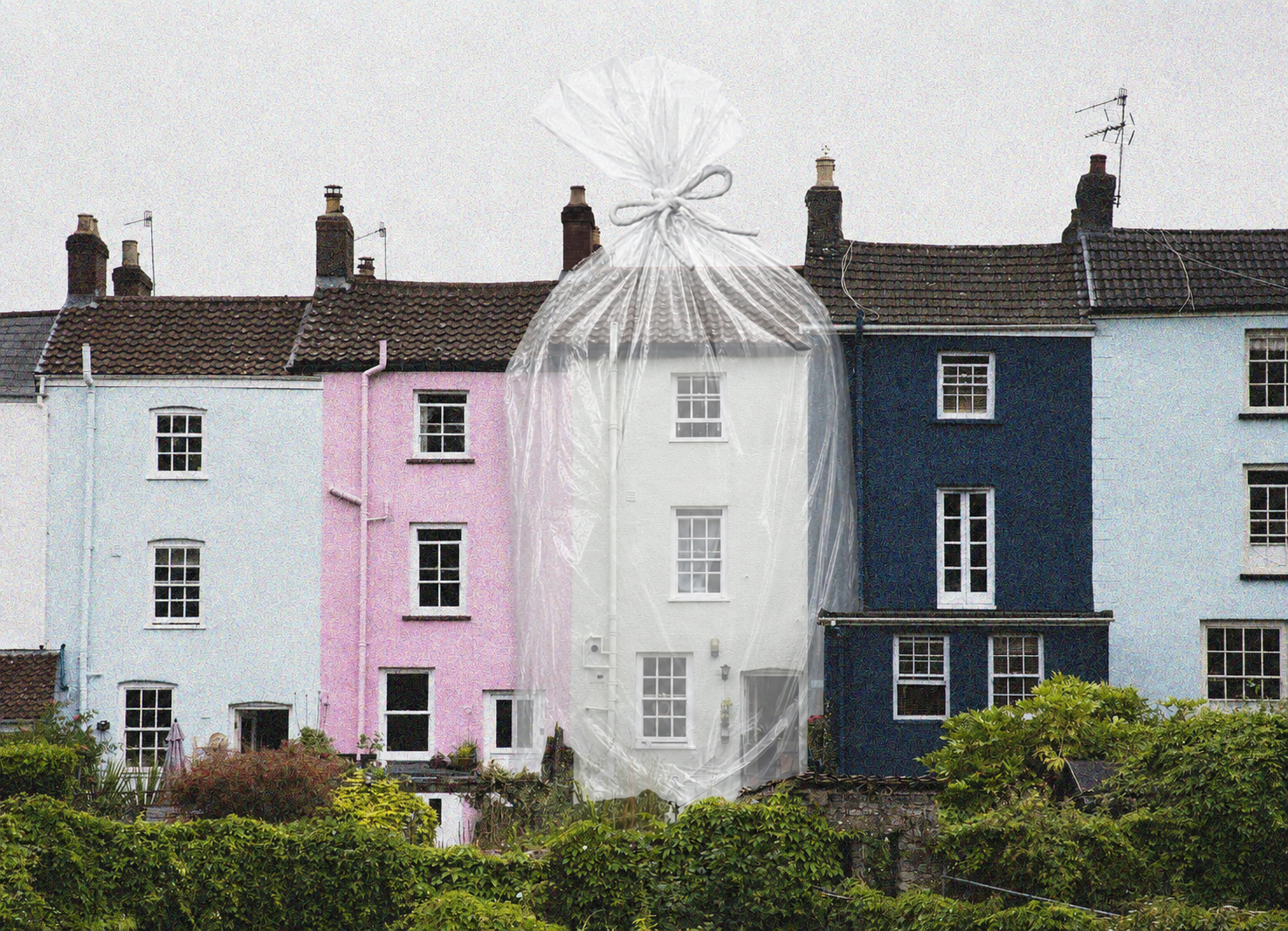
Breathability is an awkward concept, partly because the word makes buildings sound alive, and partly because it is often confused with draughts. An old house does not need air whistling through gaps to work properly. It needs its materials to let moisture move, slowly and safely, before that moisture turns into damp.
Think of a wooden chopping board after washing. It is not full of gaps, and air is not whistling through it, but the timber still takes in moisture and then dries out again. Leave it damp under a sheet of plastic, and it can stain, smell or grow mould because the drying route has been blocked. Old buildings work in a similar way: they do not need to be draughty, but their materials do need to dry.
What is the difference between breathability and vapour open?
This is where it is important to be specific in the language. Vapour open describes one part of breathability: permeability to vapour. Breathable is a general term for a building concept, where vapour open is a measurable material property. A material can be vapour open without doing everything people mean by breathable. Breathability can also include hygroscopicity, which is the ability to absorb and release moisture, and capillarity, which is the movement of liquid moisture through small pores. These are important terms to understand because a product may be marketed as breathable, but may only be slightly vapour open, or breathable in one direction, or only breathable when used in a certain build-up. Also, water should not be able to move through a house in liquid form (if it does, you have a leak!)
Can this cause problems?
Vapour movement is natural and important. It only becomes a problem when the route is blocked. Once moisture is trapped, it tends to degrade materials. Paint peels. Plaster blows. Salts appear. Timber rots. The building is often blamed for being old, when the real fault is a modern repair that has stopped it drying.
How is breathability measured?
Materials are often measured by their vapour diffusion resistance factor, or μ-value. Air is the baseline, with a μ-value of 1. The lower the μ-value, the easier it is for water vapour to pass through.
Indicative μ-values:
Mineral wool insulation: around 1
Wood fibre insulation: 3 to 5
Cork insulation: 5 to 30, depending on product and density
Lime plaster or lime render: 8 to 15
Clay plaster: 5 to 10
Gypsum plaster: around 10
Soft brick: 5 to 15
Dense brick: 15 to 30
Cement mortar or cement render: 25 to 50
Concrete: 50 to 100
PIR insulation: varies widely, but can be up to 100, especially when foil-faced
Timber: varies widely by direction and species, but is generally more resistant across the grain
Polyethylene vapour barrier: extremely vapour-resistant, up to 100,000
These numbers should be treated as a guide, because thickness, coatings and whole-wall build-up will affect them. A product can be sold as breathable and still be unsuitable for a historic solid wall.
Where breathability goes wrong
Most breathability problems are caused by good intentions with the wrong materials. Below are some common problems that could be stopping your old house from breathing as it was intended to.
Repointing
Problem: Cement mortar is often harder, denser and less vapour-open than the old brick or stone around it. Water then moves through the brick face instead of the joint. During winter, this trapped moisture can freeze, expand and split or spall brick faces. It can also push salts to the surface. The cement can also hold moisture in the wall and slow drying, which will appear as damp internally. Lime mortar is softer, more flexible and more vapour-open, so the joint can act as the sacrificial part of the wall.
Solution: rake out failing cement carefully and repoint in an appropriate lime mortar, matched to the wall and its exposure.
Cement render
Problem: Cement render can hold moisture inside solid masonry. Once cracked, it lets rain in, then slows drying. The wall becomes wet, cold and more prone to internal damp.
Solution: remove cement render where safe and appropriate, then replace with lime render or another vapour-open system. Check the condition of the wall beneath before specifying a finish.
Masonry paints
Problem: Modern masonry paints can form a skin over brick, stone or render. If moisture is already present, the paint blisters and the wall struggles to dry.
Solution: use mineral paint, limewash or a vapour-open paint system suitable for the substrate. Paint removal needs care, especially on soft London stock brick.
PIR insulation
Problem: PIR can be useful in the right place, but foil-faced boards are highly vapour-resistant. Used internally on old solid walls without a careful strategy, they can move condensation into hidden parts of the construction.
Solution: consider vapour-open insulation such as wood fibre or cork. Wood fibre systems are often used in refurbishment because they are hygroscopic, meaning that in a humid environment, they can take in and hold an enourmous amount of water, and release it later when the air is dryer.
Gypsum plaster over damp solid walls
Problem: Gypsum does not tolerate persistent moisture well and can trap damp against masonry.
Solution: Use lime plaster where the wall needs to buffer and release moisture.
Concrete floors
Problem: A concrete slab can push ground moisture towards the edges of a room, where it appears as damp in walls.
Solution: Assess the floor and wall together before adding new finishes or damp-proofing. Speak to experts about damp proof membranes, and importantly, where they should go.
Raised external ground levels
Problem: Paths, patios and flowerbeds built up against walls can bridge damp-proof courses or keep masonry wet. This is especially common where gardens and paving have crept upwards over time.
Solution: Lower external ground levels where possible and keep external drainage working. Where the ground cannot be reduced enough, a properly detailed French drain may help move water away from the wall, but it should drain to a suitable outlet and be designed with care. A badly installed French drain can hold moisture against the building and make the problem worse.
Double glazing without ventilation
Problem: Making a house more airtight can increase condensation if ventilation is not improved. This is common after old windows are replaced, especially where open fireplaces, gaps and older frames once provided background ventilation.
Solution: Pair better windows with controlled ventilation, especially in kitchens and bathrooms. Trickle vents can help provide background airflow, but they need to be used, kept clear and supported by proper extraction where moisture is produced.
FAQs
Does breathable mean draughty?
No. Draughts are uncontrolled air movement. Breathability is about how a building manages moisture. A house can be draughtproofed and still remain vapour-open.
Does an old house need to be watertight?
Yes. Roofs, walls, gutters and drains should still keep water out. Vapour openness helps the moisture that gets in to dry out again.
Are there regulations on breathability?
Not directly. Breathability is not really mentioned. The Approved Documents deal with moisture, condensation, ventilation, airtightness and energy performance instead. Approved Document C is the most relevant, because it covers resistance to moisture in floors, walls and roofs, including interstitial condensation and mould risk. Approved Documents F and L are also relevant: F deals with ventilation, while L deals with insulation and airtightness. There is also a British Standard on the management of moisture in buildings, called BS 5250. It highlights the importance of using vapour-open coatings, which has led to the rise of specialist breathable paint brands in the UK market.
Is lime always better than cement?
In most situations, we think so! Lime is softer, more flexible and more vapour-open than cement, which makes it more compatible with old brickwork and stone. It also usually has lower embodied carbon: cement is a heavily processed form of lime, fired at very high temperatures, releasing carbon from the limestone and using a lot of energy. Cement has its place, as you couldn’t use lime structurally, but it should not be the default repair.
Can I insulate an old house?
Yes, but the wall must be understood first. Insulation changes temperature and moisture patterns, so the whole build-up matters. Speak to an expert!
Where should I start?
Start with maintenance: gutters, downpipes, ground levels, pointing and ventilation. Breathable finishes cannot compensate for a leaking roof or blocked drain.
We used breathable insulation at Breathable House in Leytonstone,where cork helped improve the comfort of a Victorian terraced house while giving the building its distinctive material character.