To stop a London house overheating, first reduce the amount of heat entering the building. This usually means shading windows and rooflights, improving ventilation, carefully considering insulation, thermal mass and reducing hard landscaping. Mechanical cooling should come later, where it is genuinely needed.
For many years, Mike Tuck Studio’s office was based in the grand former council chambers of Leyton Town Hall, a building described by Nikolaus Pevsner as “fussy but enjoyable”. Its thick masonry walls and sweeping stone staircase gave it a forgotten grandeur, and were perhaps most often a reminder of a civic pride in the area that is now the most distant of memories.
But they kept us cool in the summers that first started to push 40 degrees in London. We would arrive in the morning and the thick thermal mass of the walls, their ability to absorb heat slowly, hold it in their depth and release it later, would still be radiating the warmth gathered the day before. Then the cycle would begin again.
In 2024, we moved into town, to the centre of it all on Hoxton Street. Our new office has brick walls, Crittall windows and a west-facing aspect that catches all the afternoon sun. Embarrassingly for architects, there are days when the office is simply too hot. By late afternoon, the room is an excellent lesson in everything a building needs to do better.
Why is my house overheating?
Many London houses were built around air movement. Victorian and Edwardian terraces had fireplaces, chimneys, sash windows, suspended timber floors and draughty thresholds, all of which helped air move through the building. They were imperfect, leaky and often cold, but they weren’t sealed boxes.
Over time, these houses have been altered to suit new expectations of comfort: chimneys blocked, floors insulated, windows replaced, lofts converted, rear walls opened up, side returns glazed and gardens paved over. Each change can be sensible on its own. Taken together, they can interrupt the older patterns of shade, ventilation and thermal mass that once helped a house regulate itself. In London, this is made worse by urban heat. Brick walls, dark roofs, asphalt roads, parked cars and paved gardens absorb warmth through the day and release it slowly after sunset. The house is no longer cooling into fresh night air, but into the stored heat of the city around it.
What do the regulations say about overheating?
Part O of the Building Regulations was introduced to reduce overheating in new residential buildings. It asks designers to limit unwanted solar gains in summer and provide a way to remove excess heat from the home. Although it applies to new residential buildings rather than the existing London housing stock, its logic is useful for retrofit, loft conversions and extensions: stop heat getting in, let trapped heat out, and only consider mechanical cooling once passive options have been tested. In London, this matters more than almost anywhere else in England. Part O identifies urban and some suburban parts of London as higher-risk areas, while the London Plan’s cooling hierarchy also puts orientation, shade, reflective materials, insulation, green infrastructure and ventilation ahead of air conditioning. For a homeowner, the useful question should go beyond compliance: will this room be safe and liveable in August?
SAP is the Government’s Standard Assessment Procedure for measuring the energy performance of homes, and is used to show compliance with Part L, which deals with the conservation of fuel and power. It can help test insulation, glazing, airtightness, heating, ventilation and overall energy use, but it should not be confused with a full overheating assessment. A house can perform well on winter heat loss and still overheat in summer if it has too much unshaded glass, poor ventilation or a roof build-up that holds heat in the wrong way.
Where should I start?
Start by finding the heat. Walk through the house at different times of day and notice where the sun lands, which rooms heat up first and which ones still feel hot at night. A west-facing bedroom, a loft room under a dark roof, a kitchen with large rooflights or a south-facing rear extension will all behave differently.
Then look at how the heat is getting in and whether it has any way out. Are rooflights shaded externally? Can windows be opened safely at night, or do noise, security, pollution and overlooking make that unrealistic? Is there cross ventilation, or has the house become a series of sealed rooms? Has a chimney, hallway or stairwell ventilation route been blocked? Is the loft properly insulated for summer as well as winter? Outside, check whether the garden is cooling the house or reflecting heat back at it. Paving, artificial grass, brick walls and dark fences can turn a rear garden into a heat store.
What should I avoid?
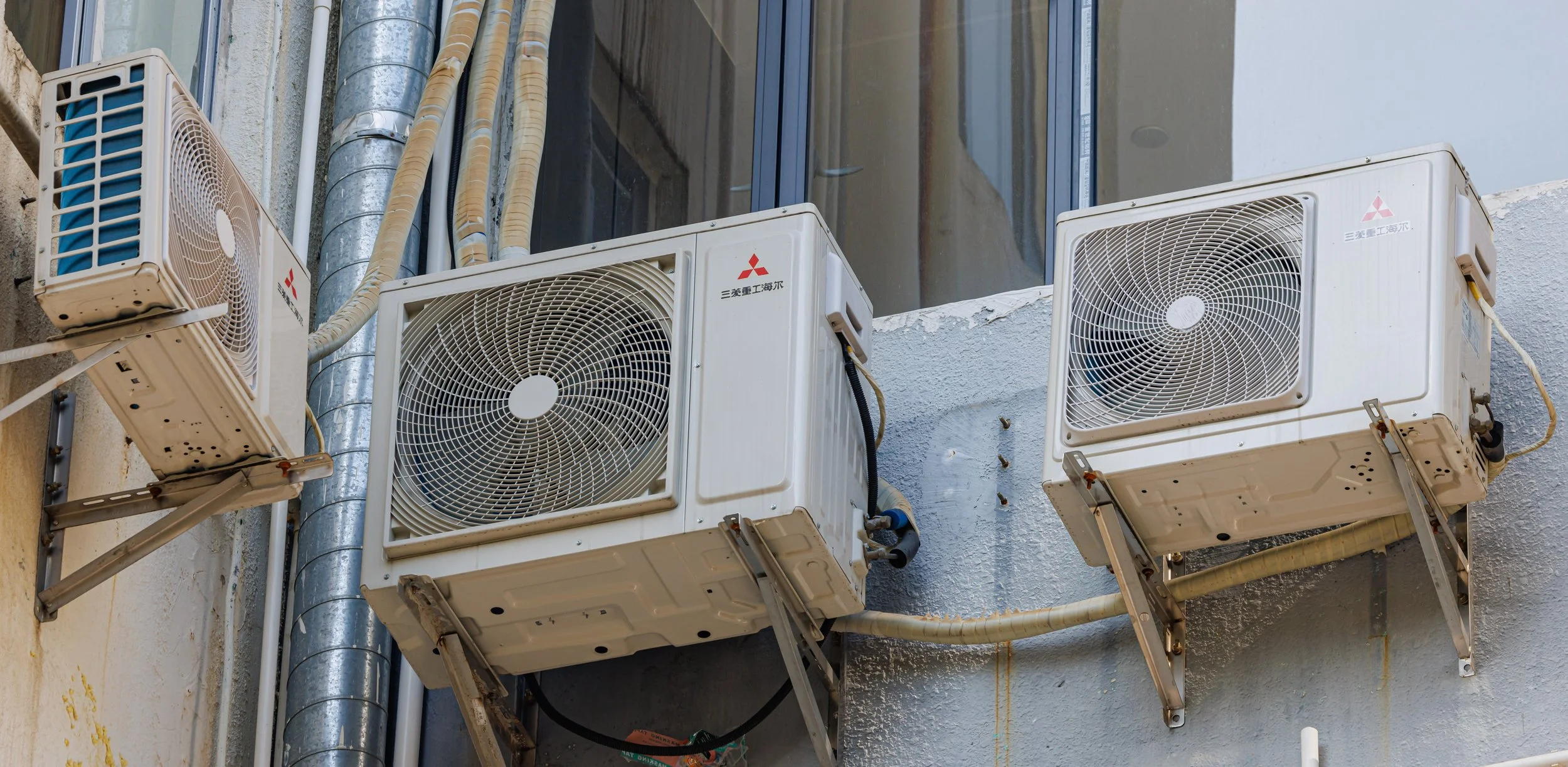
Do not begin with air conditioning as the default answer. Some homes and some occupants will need cooling, especially as summers become hotter, but a house should first be designed to keep heat out and move trapped heat away. Air conditioning added to a badly shaded, badly ventilated room is a repair bill disguised as a solution.
Do not add large rooflights without external shading. Do not assume internal blinds will solve solar gain, because the heat has already passed through the glass by then. Do not seal an old house without understanding moisture and ventilation. Do not use spray foam or impermeable insulation in older roofs without proper advice. Do not pave every external surface and then wonder why the back of the house holds heat into the evening. Windows need to be treated with the most care. Replacing them before understanding repair, shading and ventilation can remove useful air paths and create new problems.
What can I do now, without building work?
External blinds, shutters or awnings.
Curtains and blinds used before rooms heat up.
Ceiling fans.
Planting for shade.
Pale external finishes where appropriate.
Reducing internal heat from appliances and lighting.
Move sleeping arrangements during heatwaves, especially for vulnerable occupants.
What changes need design advice?
Add external shading to rooflights and windows.
Improve extract and background ventilation.
Reinstate blocked ventilation routes.
Replace hard landscaping with permeable, planted surfaces.
Add trees, pergolas or planted screens.
Repair or upgrade sash windows so they ventilate properly.
Review glazing specification in extensions.
Be careful when insulating one part of your house in isolation, it can create hotspots in the summer.
What should be designed in from the start?
Redesign overheating rear extensions.
Reduce or reconfigure roof glazing.
Retrofit roofs with better thermal performance.
Use woodfibre, cork, cellulose, lime or clay where appropriate.
Add external insulation where suitable.
Design new extensions with summer comfort from the start.
Consider mechanical cooling only after passive measures have been assessed.
When should I consider mechanical cooling?
Mechanical cooling should be considered where passive measures cannot keep a room safe and comfortable, particularly for vulnerable occupants or rooms that cannot be ventilated safely at night. It should not be used to excuse avoidable design problems, such as unshaded rooflights, excessive glazing or poor ventilation. A good overheating strategy reduces the cooling load before adding equipment.
Will it be enough?
There will be days when passive cooling alone is hard. As London heats up, some homes will still need carefully targeted mechanical cooling, particularly for vulnerable occupants. The point is to make the house work as hard as it can first: shade the glass, slow heat through the fabric, move air safely, and reduce the cooling load before adding equipment.
See how we used breathable insulation at Breathable House to improve summer comfort while giving the building its distinctive material character.